How Will Resource Allocation in Project Management Evolve Next?
Posted By : Pragati Kathuria | 08-Sep-2025
Almost 75 percent of organizations are adopting intelligence-driven models for resource allocation in project management. Distributed teams, overlapping projects, and shifting priorities have made traditional planning insufficient.
AI-driven resource allocation goes beyond efficiency. It provides strategic insights, helps teams anticipate challenges, respond quickly, and maintain steady progress. Organizations can optimize resources, strengthen collaboration, and stay agile.
In this blog, we explore what's next in automated resource allocation and the trends shaping the future of modern enterprises.
What is Resource Allocation and Why It Matters
Definition:
Resource allocation is the process of assigning available resources—such as people, time, and budget—to tasks or projects in the most effective way to achieve goals efficiently.Why it matters in project management:
Effective resource allocation ensures the right resources are available at the right time. It helps teams meet deadlines, avoid bottlenecks, maintain productivity, and make strategic decisions. It also improves collaboration and keeps organizations agile across complex, multi-project environments.
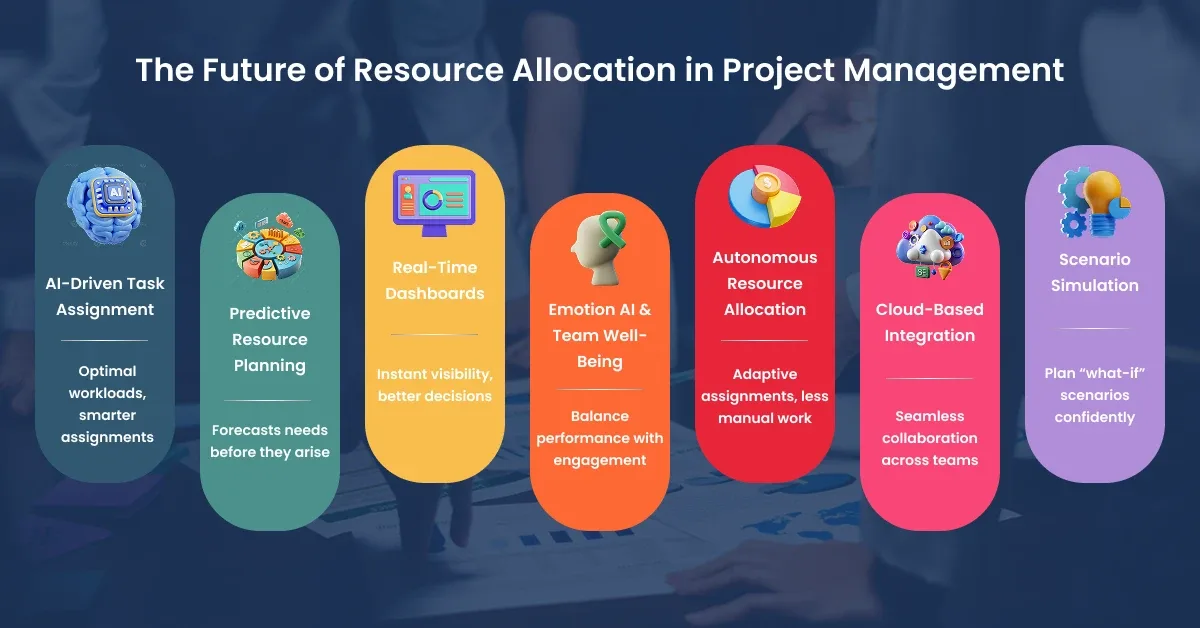
1. AI-Driven Task Assignment
Artificial intelligence can now evaluate multiple factors. This includes skills, timelines, availability, and dependencies, to assign tasks optimally.
Strategic Implications:
- Balanced workloads reduce bottlenecks.
- Human expertise is applied where it adds the most value.
- Teams adapt faster to changing project priorities.
Why it matters: AI-driven task assignment turns resource utilization into a strategic lever. Gartner (2024) predicts that by 2026, 65% of project-centric organizations will use AI-driven tools for resource allocation to improve speed and utilization.
Watch how we at Oodles bring clarity and efficiency to resource allocation in this video.
2. Predictive Resource Planning
Predictive analytics uses historical data, performance trends, and workload patterns to anticipate future needs.
Strategic Implications:
- Forecast skill gaps and high-demand periods.
- Enable targeted hiring, upskilling, or redeployment.
- Mitigate project risk through proactive planning.
Why it matters: Predictive resource allocation in project management shifts planning from reactive to forward-looking, making resource planning a strategic advantage.
3. Real-Time Dashboards and Monitoring
Dynamic dashboards in resource allocation tools provide live insights into where resources are allocated, project progress, and potential bottlenecks.
Strategic Implications:
- Conflicts and overextensions are identified immediately.
- Decisions are data-driven rather than delayed.
- Timely adjustments maintain project momentum.
Why it matters: Real-time visibility ensures sustainable project velocity. PMI research shows projects with real-time monitoring achieve 30% higher success rates than those using periodic reporting.
4. Emotion AI and Team Well-Being
Emotion AI evaluates workload distribution, stress levels, and team sentiment to balance productivity with human needs.
Strategic Implications:
- Detect burnout risk early.
- Align performance expectations with employee well-being.
- Retain and motivate top talent.
Why it matters: Effective resource allocation requires respecting the human element to sustain long-term performance.
5. Autonomous Resource Allocation
AI-powered systems automatically reassign resources as conditions change, reducing manual effort.
Strategic Implications:
- Decreases administrative overhead.
- Allows leaders to focus on strategic decisions.
- Ensures agility during unexpected project shifts.
Why it matters: Autonomous resource allocation in project management improves responsiveness in fast-paced environments.
6. Cloud-Based Integration for Scalability
Cloud-enabled resource management platforms integrate teams, systems, and geographies seamlessly.
Strategic Implications:
- Multi-team projects operate from a unified system.
- Distributed teams collaborate efficiently.
- Governance, compliance, and data security are easier to manage.
Why it matters: Scalable infrastructure supports growth while maintaining clarity. Deloitte (2023) found that cloud-enabled organizations scale operations 2.7x faster without efficiency loss.
7. Scenario Simulation and “What-If” Planning
Advanced resource allocation systems simulate multiple scenarios before changes impact live projects.
Strategic Implications:
- Leaders can foresee the impact of resource or timeline adjustments.
- Risk modeling and contingency planning become faster and more reliable.
- Decisions are confident and data-backed.
Why it matters: Reducing uncertainty enhances agility and resilience in complex projects.
Before vs. After: Resource Allocation in Practice
- Task Assignment
- Before: Manual allocation often created uneven workloads.
- After: AI-driven systems balance tasks fairly across the team.
- Planning Approach
- Before: Reactive methods addressed issues only after they appeared.
- After: Predictive planning anticipates needs and prevents delays.
- Visibility
- Before: Managers relied on periodic reports with limited insights.
- After: Real-time dashboards provide continuous, actionable visibility.
- Team Well-Being
- Before: Burnout was detected late, usually after productivity dropped.
- After: Emotion AI tracks engagement early, enabling timely support.
- Responsiveness
- Before: High administrative effort was needed to reallocate resources.
- After: Autonomous systems handle reallocation instantly.
- Scalability
- Before: Coordinating large teams was difficult and resource-heavy.
- After: Cloud-based integration makes scaling seamless and efficient.
- Decision Confidence
- Before: Leaders often relied on gut instinct for decisions.
- After: Scenario simulations deliver data-backed confidence.
Takeaway: Traditional resource allocation was reactive and inefficient. Intelligent allocation empowers organizations with foresight, agility, and clarity in project management.
Frequently Asked Questions (FAQs)
Q1: How soon can organizations see results from automated resource allocation?
Even partial adoption like predictive planning or real-time dashboards can deliver measurable improvements within a single project cycle.
Q2: Does AI replace human judgment in resource allocation?
No. AI enhances decision-making by providing better insights, but strategic direction and team alignment remain human responsibilities.
Q3: Can predictive resource planning prevent project delays?
Yes. By forecasting capacity, skill gaps, and workload peaks, leaders can proactively allocate resources to reduce bottlenecks and maintain timelines.
Q4: How does emotion AI improve resource allocation outcomes?
Emotion AI monitors team sentiment and stress, helping balance workloads and maintain engagement, which drives productivity and reduces turnover.
Q5: What is the biggest risk of ignoring these trends?
Organizations that rely solely on traditional allocation risk inefficiency, slower response to change, and falling behind competitors who leverage intelligent, automated resource planning.
Closing Insight
The future of resource allocation in project management is not just about efficiency—it's about foresight, resilience, and adaptability. Organizations embracing AI-driven resource management, predictive planning, and real-time insights will navigate complexity more effectively, manage risk proactively, and achieve long-term success.
Have thoughts on AI in project management? Join the conversation and share your perspective with our experts.
Key Takeaways
- Automation + Intelligence = Strategic Edge: Allocation is now about foresight, resilience, and adaptability.
- Data Visibility Empowers Decisions: Real-time dashboards and predictive analytics extend leaders' reach.
- The Human Factor Matters: Balancing efficiency with well-being ensures sustainable outcomes.


Cookies are important to the proper functioning of a site. To improve your experience, we use cookies to remember log-in details and provide secure log-in, collect statistics to optimize site functionality, and deliver content tailored to your interests. Click Agree and Proceed to accept cookies and go directly to the site or click on View Cookie Settings to see detailed descriptions of the types of cookies and choose whether to accept certain cookies while on the site.















About Author
Pragati Kathuria
Pragati is a seasoned Content Writer with extensive experience in the field. Her expertise spans multiple domains, including press releases, news site content, SEO, and website content writing. With her broad knowledge of content marketing, Pragati excels as a content strategist. Her role involves crafting engaging social media posts and well-researched blog articles to build a unique brand identity. Additionally, she collaborates effectively with her team to drive client growth, showcasing her strong teamwork and strategic abilities.